Why the LeStallion Fountain Pen Notebook Changes Your Writing Practice
A Notebook That Respects Your Fountain Pen
I have tested maybe a hundred notebooks over the past decade. Some were too slick, so the ink beaded up and smeared. Others were too absorbent, turning a fine nib into a fuzzy marker. Finding paper that actually works with a fountain pen takes patience and money. The LeStallion fountain pen notebook is one of the few that gets it right without trying to be everything to everyone.
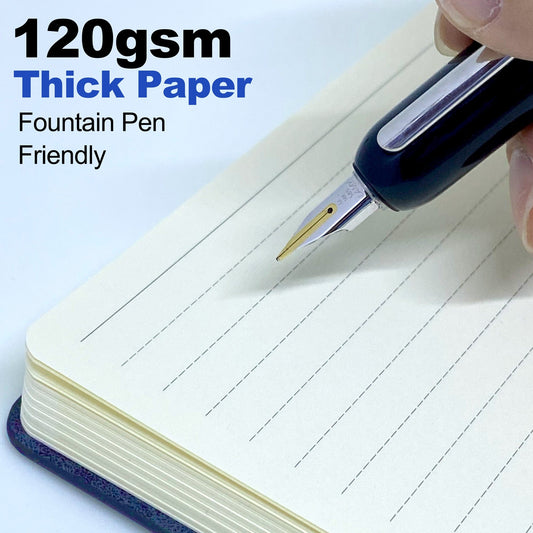
The paper is the first thing you notice. It has a subtle tooth, enough to give the nib a gentle resistance that helps you control line width. Yet it is smooth enough that a well-tuned medium nib glides without catching. I wrote a full page with a Pilot Custom 823 filled with Sailor Shikiori Yoi, a wet ink that pools on lesser paper. There was no feathering, no bleed-through, and only a faint ghosting on the reverse side that did not interfere with writing on the other side. That balance is hard to achieve. Most manufacturers either coat the paper so heavily that it feels plasticky or leave it too raw so that ink spreads like a watercolor wash. LeStallion found a middle ground that feels natural.
Why Paper Quality Matters More Than You Think
When you write with a fountain pen, you are putting liquid down on cellulose fibers. The way those fibers absorb and hold the ink determines whether your letters stay crisp or turn into blobs. The LeStallion fountain pen notebook uses 100 gsm paper that has been treated just enough to keep the ink on the surface while the fibers grab the pigment. This is the same principle that makes Tomoe River paper famous, but LeStallion uses a slightly heavier sheet that feels more substantial in the hand. It does not crinkle or warp when you write on both sides, which is a common complaint with thinner papers.
I have tried many notebooks that claim to be fountain pen friendly. Some are, until you use a broad nib or a flex pen. The LeStallion notebook handles those extremes without complaint. I wrote a few lines with a vintage Waterman with a flexible nib that lays down a heavy wet line. The paper did not bleed through, and the reverse side remained perfectly usable. That is a serious test, and it passed.
Binding and Layout That Support Real Use
Paper alone does not make a great notebook. The binding matters just as much. The LeStallion fountain pen notebook lies flat when opened, which is essential if you write near the inside margin. Many sewn bindings force you to crack the spine or press the book open, which eventually breaks the glue. LeStallion uses a lay-flat binding that does not fight you. After a week of daily use, my notebook stayed open to the page I was working on without me holding it down.
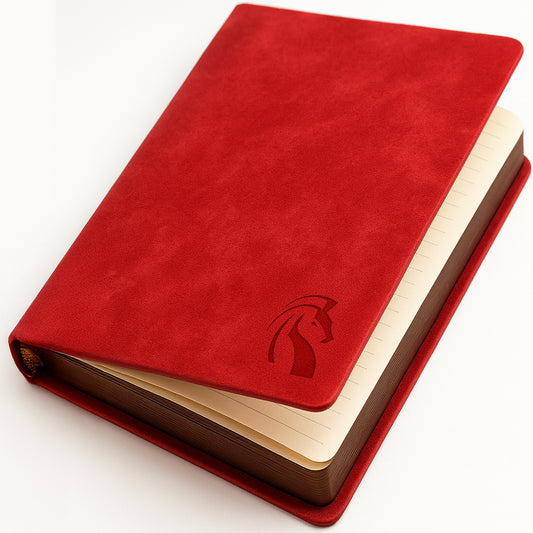
The cover is a soft, durable material that feels like leather but is not stiff. It bends easily so you can roll the notebook or stuff it in a bag without damaging the pages. I took mine on a three-day trip, threw it in a backpack with a laptop and a water bottle, and it came back with only a few scuffs on the cover. The pages inside were pristine.
The layout is simple: dot grid on every page. I prefer dot grid because it gives structure without the visual noise of a ruled line. You can write straight, sketch diagrams, or make tables, and the dots fade into the background when you are reading back your notes. The grid is printed in a light gray that does not compete with the ink. I have seen notebooks where the grid is too dark and makes the page look busy. LeStallion got the shade right.
How It Fits Into a Productive Writing Routine
A notebook is only as good as the habits it supports. The LeStallion fountain pen notebook has a few design choices that nudge you toward consistent use. The page count is 192 pages, which is enough to last a couple of months for most people but not so many that you feel like you will never finish it. There is a ribbon bookmark sewn into the spine, and it stays put. I used it to mark my current page and never lost my place.
The notebook also has a pocket in the back cover. I keep a few loose sheets of blotting paper and a couple of stickers in mine. That pocket is not deep enough to hold a passport or a phone, which is fine. It is meant for flat items that would otherwise get lost between pages. I appreciate that the designers did not try to turn it into a wallet. It stays focused on writing.
If you are building a daily writing practice, the friction between you and the notebook has to be low. You should not have to fight the paper, the binding, or the layout. The LeStallion fountain pen notebook removes those obstacles. I found myself reaching for it more often than my other notebooks simply because it was pleasant to use. That is the real test of a productivity tool: does it make you want to use it?

Practical Tips for Getting the Most Out of It
- Use a moderately wet ink for the best experience. Very dry inks can feel scratchy on the tooth, while super-wet inks may take a few seconds longer to dry. A standard ink like Pilot Iroshizuku or Waterman works perfectly.
- Let the ink dry for about five seconds before closing the notebook. The paper is not coated, so wet ink can transfer if you slam the book shut immediately.
- Write on both sides. The 100 gsm paper handles it well, and you will get twice the use out of each page.
The Real Cost of a Good Notebook
A LeStallion fountain pen notebook is not cheap. It sits in the same price bracket as other premium notebooks like Rhodia or Leuchtturm. But the paper quality is better than both for fountain pen use. Rhodia paper can be too slick for some nibs, and Leuchtturm paper has gotten thinner over the years, leading to more bleed-through. LeStallion seems to have optimized specifically for fountain pens, which makes sense given the brand's focus on writing instruments and accessories.
When you consider that a single fountain pen can cost hundreds of dollars and a bottle of ink can run twenty to fifty dollars, skimping on the notebook is a mistake. Bad paper can ruin the experience. It can make a smooth nib feel scratchy, cause shading inks to look muddy, and force you to write on only one side of the page. A good notebook protects your investment in the pen and ink, and it makes writing a pleasure instead of a chore.
The LeStallion fountain pen notebook also works well with other writing instruments. I tested it with a Pilot G2 gel pen and a Uni-ball Signo. The gel ink dried quickly and did not smear. The paper handled ballpoint and rollerball without issue. So even if you switch between pens depending on the task, the notebook stays consistent.
Who Should Buy This Notebook
If you already own a fountain pen and use it regularly, this notebook is a natural fit. It removes the paper variable from your setup so you can focus on what you are writing. If you are new to fountain pens and want a notebook that will not frustrate you as you learn how different inks behave, this is a solid choice. It is forgiving enough that a wet ink or a broad nib will not cause a mess, but it still gives you the feedback that makes fountain pen writing satisfying.
If you only write with ballpoints or pencils, you can certainly use this notebook, but you are paying for paper qualities you will not fully use. In that case, a cheaper notebook might serve you just as well. But if you care about the feel of the pen on the page and want a notebook that can handle anything you throw at it, the LeStallion fountain pen notebook is worth the money.
I have been using mine for three weeks now. The cover has softened a little, the pages have taken on the slight curve of being carried around, and the ribbon bookmark is starting to fray at the edge. It looks like a well-loved tool. That is the best compliment I can give a notebook: it gets used, and it gets used hard. And it still works perfectly.